Follow-Up CRM: What It Is and How to Choose One
A follow-up CRM tells you who to contact today and reminds you before a prospect goes cold. How it works, what to look for, and how SAGA does it.
Last updated About 3 hours ago
Key takeaways
A follow-up CRM is a contact manager built around one job: making sure everyone you've talked to hears from you again at the right time.
It opens on today's list, flags the follow-ups you've missed, and asks you to book the next one before you move on.
Test any tool on your phone, first thing in the morning. If it can't tell you who to message today, it's just an address book.
There's a sticky note on your laptop that says "Message Jess next week." You wrote it three weeks ago. Jess has since bought from someone else.
Or maybe your system is WhatsApp itself. You scroll back through 40 chats trying to remember who asked about the starter kit, who said "after payday" and who you promised a call on Thursday. By chat 25 you give up and post a story instead.
Been there?
Most sales, and nearly all network marketing sales, don't happen in the first conversation. They happen when you get back in touch. But follow-up is the first thing to slip, because it lives in your memory, on sticky notes and somewhere deep in your chat history.
Here's what a follow-up CRM does, how to build a rhythm you'll stick to, and how to pick a tool you'll really use.
What is a follow-up CRM?
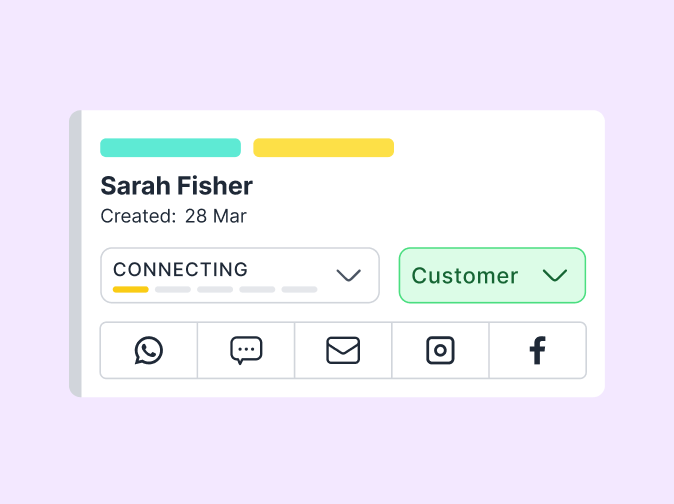
A CRM (customer relationship management tool) is where your contacts and your conversation history live. A follow-up CRM adds one small thing that makes a big difference. Every contact has a next step with a date on it, and the app turns all those dates into a daily list.
Want a quick test? Open the app first thing in the morning.
If it tells you exactly who to message today, it's a follow-up CRM. If it shows you everyone you've ever met, it's an address book with a nicer font.
Follow-up CRM vs a regular CRM
Plenty of CRMs can technically handle follow-ups. The real difference is what the app puts in front of you by default.
Why follow-ups fall through the cracks
If you've dropped the ball on a follow-up, join the club. It usually happens in one of four ways.
1. It lives in your head
Your brain is great at remembering the excited people. The ones who replied "yes, tell me more!!" with three emojis. It's pretty bad at remembering the "maybe later" crowd.
And those are often your best prospects. "Not now" usually means "ask me again."
2. Your chats are all over the place
WhatsApp, Instagram DMs, Messenger, email. Without one list, there's no way to see who's waiting on you.
3. Nobody books the next step
The chat ends with "let me think about it." You reply "no rush!" and that's it. No date, no plan.
A week later, neither of you remembers where you left it. That's how a warm lead quietly goes cold.
4. You're worried about being pushy
Without a clear reason to get back in touch, most people just don't. Nobody wants to send "just checking in!" for the fourth time.
A good system fixes this by giving you the moment and a suggested next step. Then the follow-up feels helpful instead of awkward.
How to build a follow-up routine in 5 steps
The tool matters. But the habit matters more. Here's a simple routine you can run in any follow-up CRM.
1. Put everyone in one list
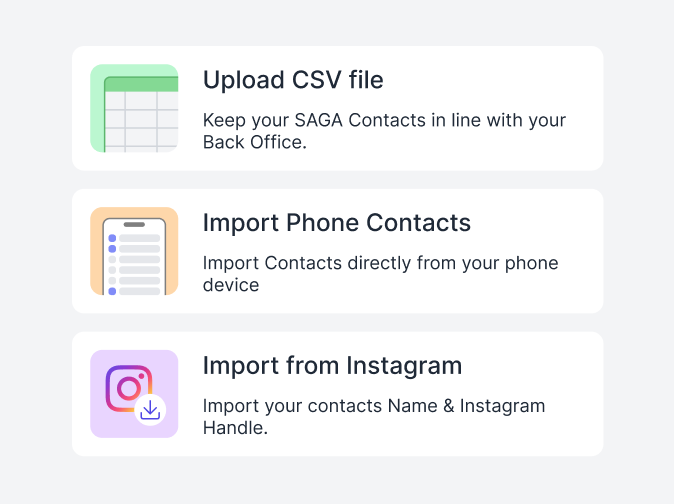
Pull in your phone contacts, that old spreadsheet from your first month, and the Instagram followers you've actually spoken to. One list beats five half-lists every time.
2. Give every contact a stage
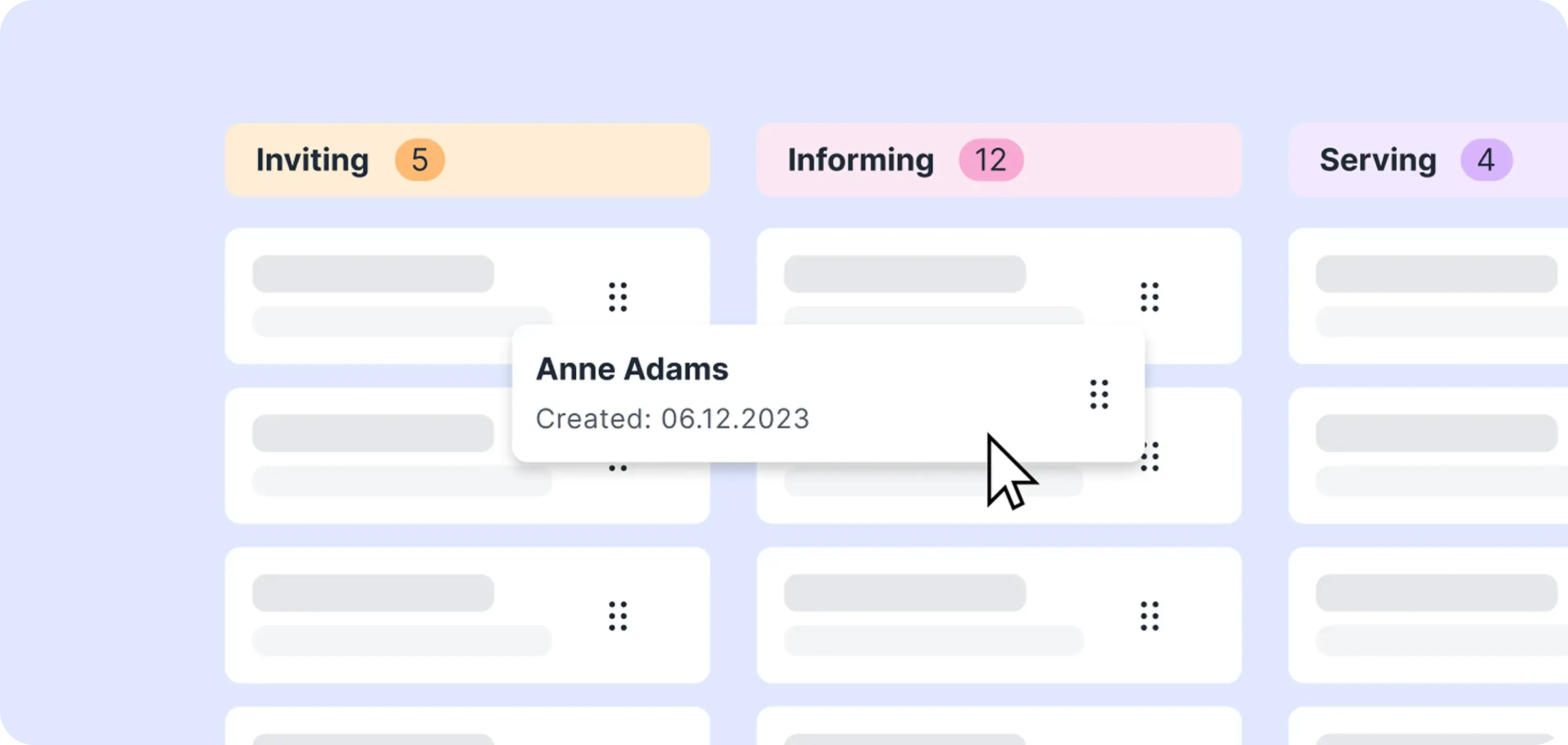
For example connecting, inviting, informing, serving. The stage tells you what kind of message comes next. A note to someone you just connected with should look very different from one to someone who's already seen the info.
3. Book the next follow-up before you close the chat
In 24 hours, in 3 days, in a month. Pick a date while the conversation's still fresh, and jot down one line about what you talked about ("wants to try samples, busy with the kids on Saturdays"). Future you will be grateful.
This is the step almost everyone skips. Don't be one of them.
4. Work the list at the same time every day
Block out a power hour, a focused chunk of time with notifications off. For most people, that's plenty.
Showing up every day beats a giant catch-up session once a month.
5. Clear the missed ones first
Start each session with overdue follow-ups, then today's, then new outreach. Jump straight to the shiny new leads and the backlog just keeps growing.
How to choose a follow-up CRM: 7 checks
Most CRM demos look great. The real test is a busy afternoon with 15 minutes and just your phone. Put any tool through these first.
Open the app. Does the first screen show who to contact today, or just a list of everyone?
Missed follow-ups should jump out at you. If you have to go digging for them, you won't.
Booking the next follow-up should take a tap. If it takes a form, you'll skip it. Everyone does.
It should reach people where they actually reply, so WhatsApp and SMS as well as email.
Importing should be easy. Phone contacts, a CSV and your social media contacts, in minutes.
New leads should land in your list on their own, straight from your lead capture pages.
It has to work properly on your phone. Most follow-ups happen at the school gate or in the coffee queue, not at a desk.
If a tool stumbles on the first three, it doesn't matter how pretty the dashboard is.
How SAGA works as a follow-up CRM
SAGA is our own product, an Operational System for Network Marketers, co-designed with Frazer Brookes, who built a 300,000+ team in five years. And follow-up sits right at the centre of it.
Key features
Your dashboard shows today's, upcoming and requested follow-ups.
On the Messaging page, every contact has a colour-coded status. Purple means no follow-up scheduled, green means scheduled and red means missed.
When you mark a follow-up done, SAGA can ask when to book the next one: in 24 hours, 3 days, a month, or a date you choose. That's step 3 of the routine above, built right in.
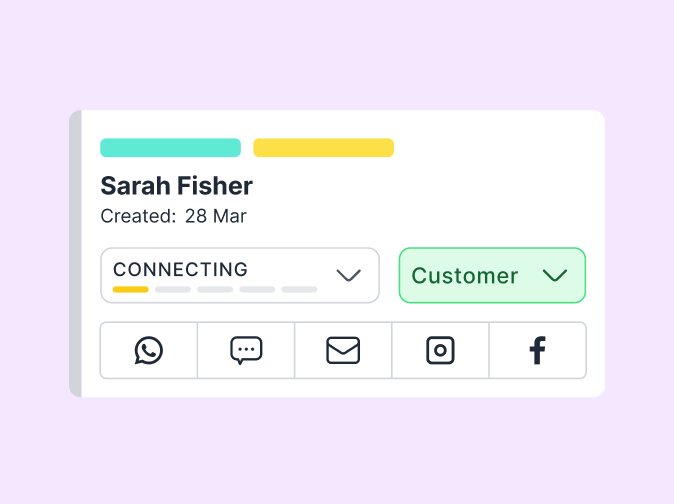
Every contact card has one-tap WhatsApp, SMS, email, Instagram and Facebook buttons.
Each contact has a pipeline stage and a full activity timeline, so you can check what you last talked about before you hit send.
New leads arrive on their own through Linkmate, lead magnets, info pages and forms.
Pricing
You can start on the free plan or take the 7-day free trial. Paid plans are $29.99 a month for Basic, $42.99 for Plus and $56.24 for Pro, less if you pay yearly.
Where it falls short
SAGA is built for relationship selling. If you run B2B pipelines with quotes and invoices, it's not the right fit.
You also can't pause your account, but you can switch to the free plan to keep your data and stop paying. WhatsApp broadcasts are on the Pro plan only. And SAGA doesn't have native payment processing.
Frequently asked questions
What is the best CRM for follow-up?
The best follow-up CRM opens on today's list, flags missed follow-ups, lets you book the next one in a tap and reaches people on WhatsApp as well as email. SAGA does all four, with a free plan to try it.
How often should you follow up with a prospect?
A good starting rhythm is within a day or two of the first chat, again a few days later, then weekly or monthly for the "not now" crowd. There's no hard rule, though. Asking people what timing suits them works best.
What should a follow-up message say?
Mention your last conversation, add something useful and end with one easy question. That useful bit could be an answer, a sample or a short video. Keep the whole thing short enough to read in a notification.
Can I use a spreadsheet as a follow-up CRM?
At the start, sure. But a spreadsheet won't remind you, won't flag missed follow-ups and won't open WhatsApp for you. So it starts to fall apart as your list grows.
Does a follow-up CRM work with WhatsApp?
A good one does. You should be able to open a WhatsApp chat from the contact in one tap. In SAGA that button's on every contact card, and WhatsApp broadcasts are on the Pro plan.
Is a follow-up CRM worth it for a small business?
If you sell through relationships, usually yes. Save one sale from a forgotten follow-up and it often covers the monthly cost. SAGA has a free plan, and paid plans start at $29.99 a month.
Conclusion
A follow-up CRM won't write your messages or make the calls for you. What it does is make sure the "maybe later" people actually get a later.
So start small. Import a few contacts and book their next follow-ups. Once you know exactly who to message each day, the sticky notes can go in the bin.
Want the nuts and bolts? The Messaging help article walks through the follow-up screen step by step.
For the bigger picture, here's what a network marketing CRM needs to do, plus our guide to network marketing training if you're bringing new people in.
Curious what else SAGA does? Browse the full feature list, or see how SAGA for Teams keeps a whole team following up.
Or skip the reading and give it a go. Your "maybe later" list is waiting.
Was this helpful?
Still need help? Ask the team